Explore Syria’s ancient sites, where the remains of cities, temples, palaces, theatres, fortifications, and settlements reveal thousands of years of human history. From Bronze Age kingdoms to the Greek, Roman, Byzantine, and later periods, these archaeological sites reflect Syria’s important role as a crossroads of civilizations, cultures, religions, and trade.
Palmyra
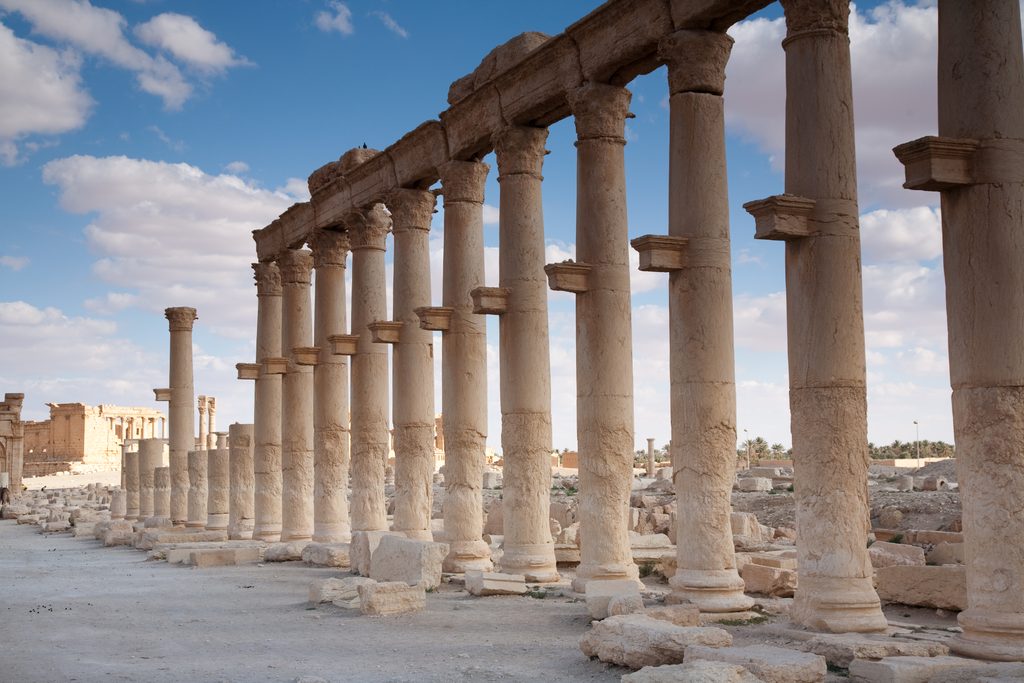
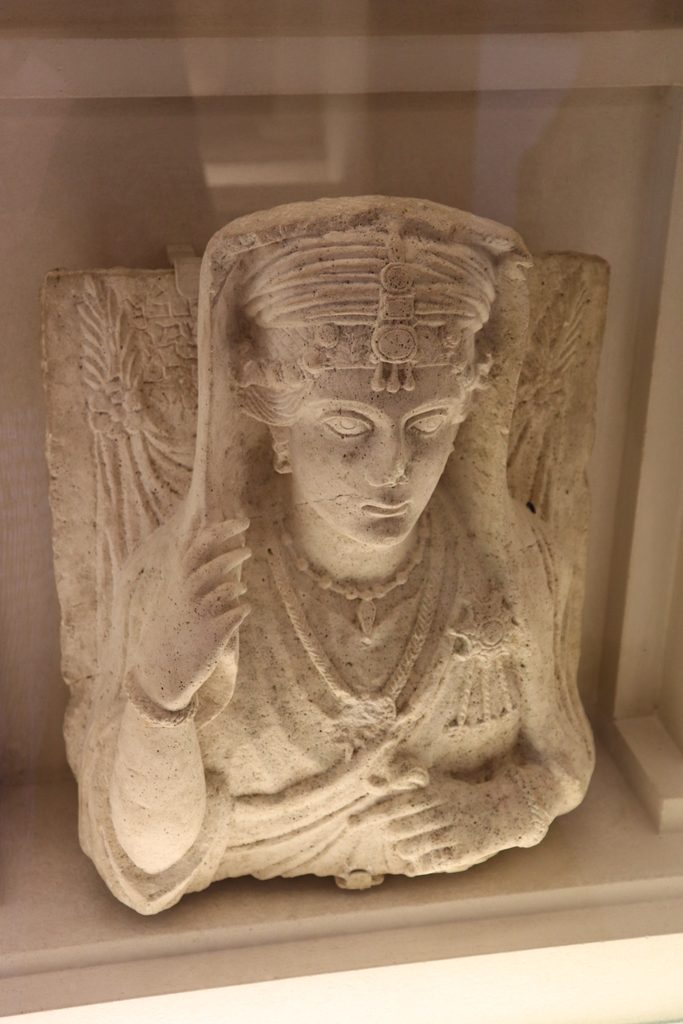
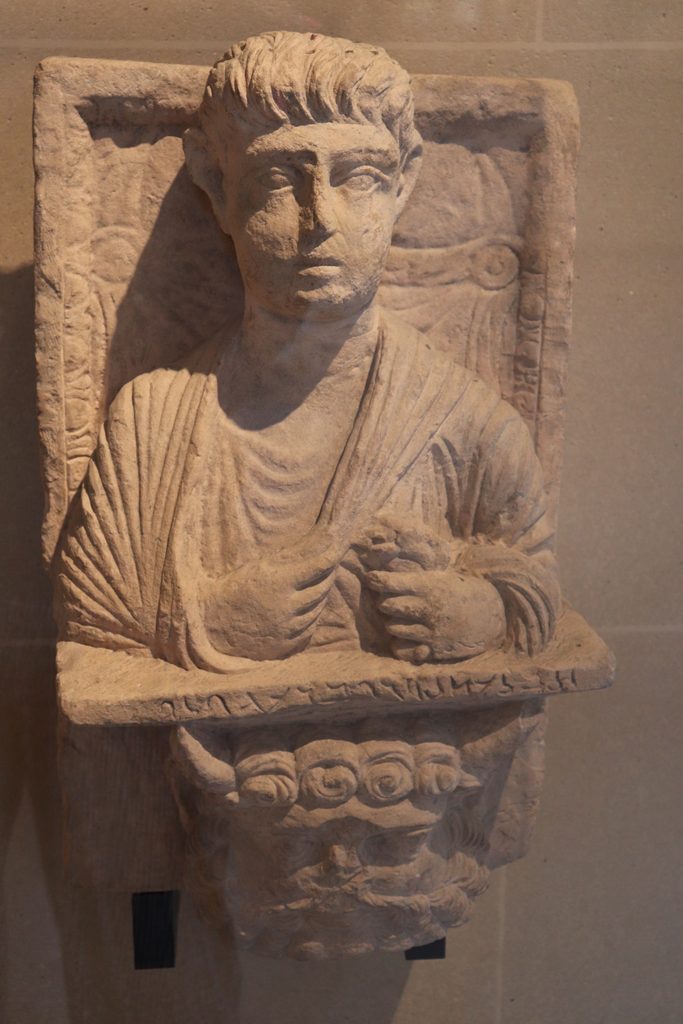
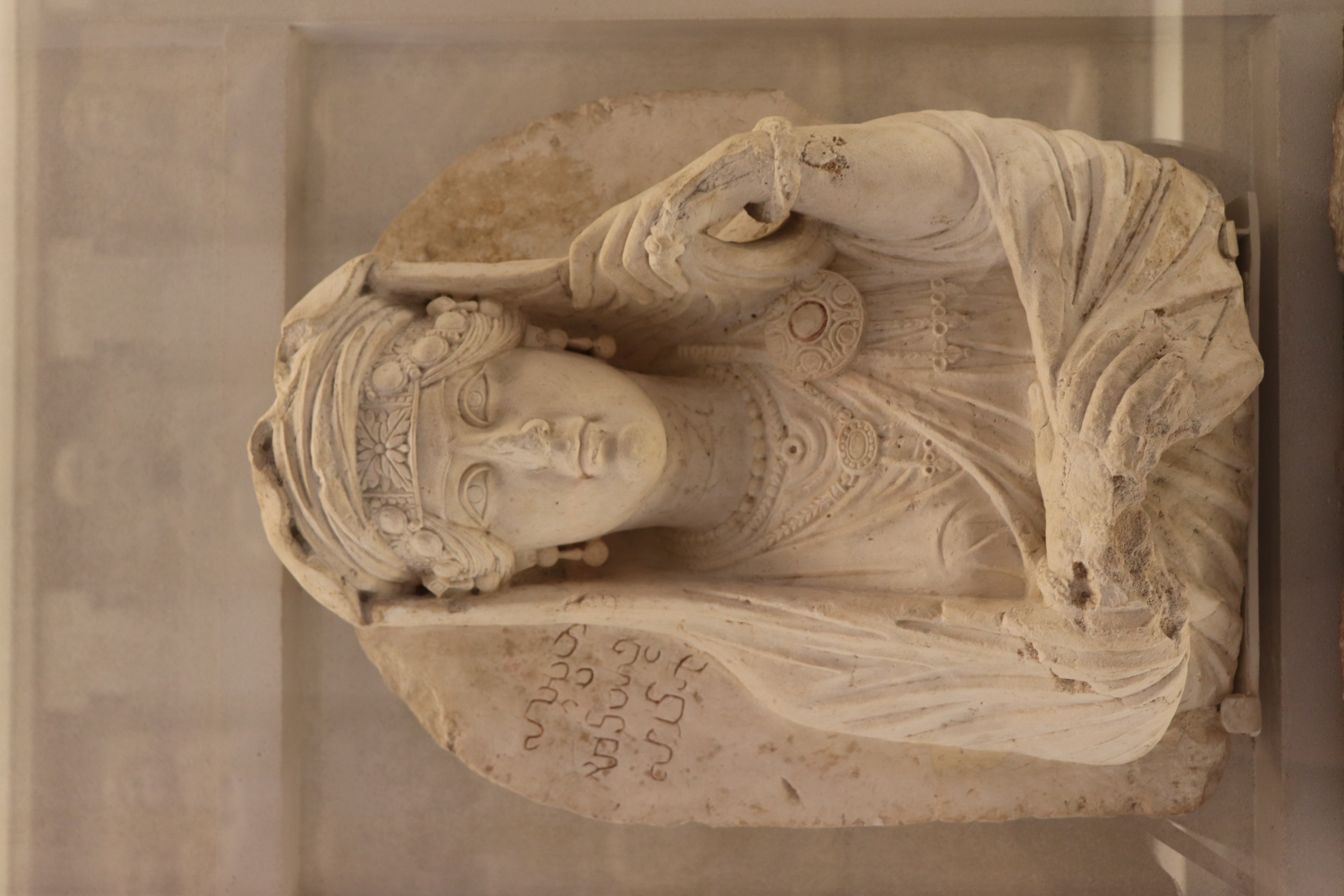
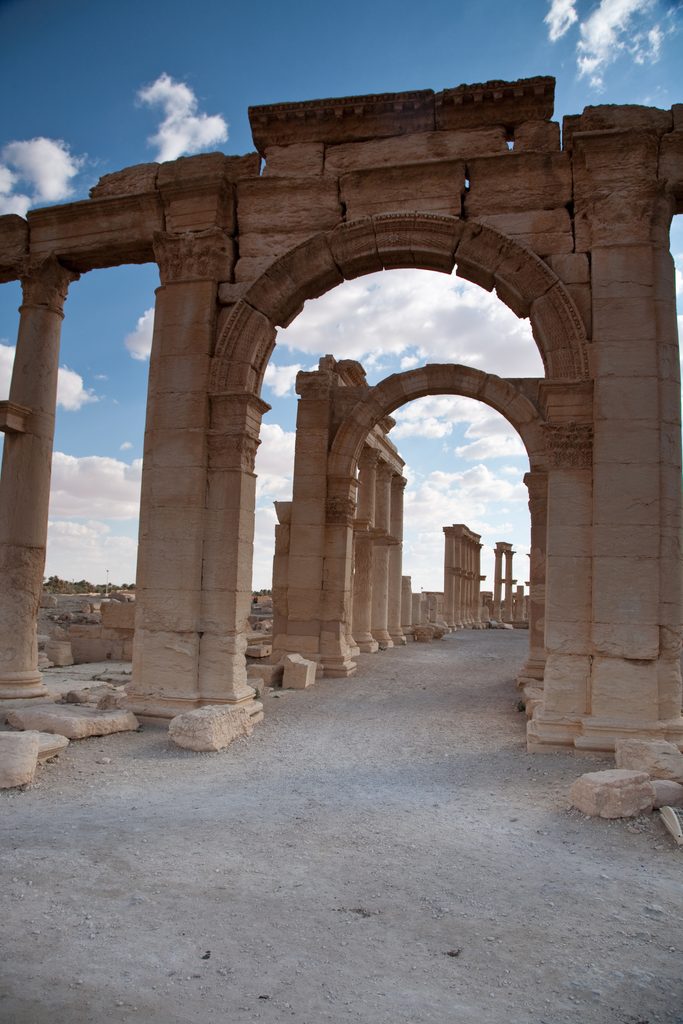
Palmyra, an ancient oasis city in the Syrian Desert, flourished as an important centre of trade connecting the Mediterranean world with Mesopotamia and regions farther east. Among the most distinctive aspects of Palmyrene culture were its funerary traditions. Families buried their dead in elaborate tower tombs and underground hypogea, where burial compartments were often sealed with finely carved limestone portraits known as funerary busts. These sculptures portrayed the deceased in distinctive clothing, jewellery, and hairstyles, providing a remarkable record of Palmyrene society and identity. Many bear inscriptions written in Palmyrene Aramaic, the local form of Aramaic used in the city, often recording the name and family relationships of the deceased. Together with Palmyra’s temples, colonnaded streets, and monumental architecture, these tombs, portraits, and inscriptions provide an exceptional insight into the language, beliefs, families, and cultural traditions of ancient Palmyra.
Ugarit
Ugarit, located at Ras Shamra on Syria’s Mediterranean coast, near the city of Latakia, was one of the most important cities of the Late Bronze Age.
Flourishing particularly during the second millennium BCE, it was a prosperous centre of trade and cultural exchange connecting Syria with Anatolia, Mesopotamia, Egypt, Cyprus, and the wider Mediterranean world. Excavations have revealed palaces, temples, houses, tombs, archives, and thousands of clay tablets written in several languages. Ugarit is especially celebrated for its distinctive Ugaritic alphabetic cuneiform script, represented by thirty signs and used to record the Ugaritic language on clay tablets. The texts discovered at the site—including administrative records, letters, religious works, myths, and literary compositions—provide an extraordinary window into the language, beliefs, diplomacy, economy, and everyday life of ancient Syria.
Ebla
Ebla, located at Tell Mardikh in northwestern Syria, was one of the great urban centres of the ancient Near East. The city flourished particularly during the third millennium BCE, when it became the centre of a powerful kingdom with extensive political and commercial connections across Syria and Mesopotamia. Excavations uncovered palaces, temples, fortifications, and, most remarkably, a royal archive containing thousands of clay tablets. Written primarily in Sumerian and Eblaite using cuneiform script, these tablets preserve administrative accounts, diplomatic records, treaties, vocabulary lists, and information about people and places throughout the region. The discovery of the Ebla archives transformed modern understanding of early Syrian history, revealing a sophisticated literate society with an organised administration, far-reaching trade networks, and a rich cultural life.
Mari
Mari, located at Tell Hariri on the Euphrates River in eastern Syria, was one of the great cities and political centres of ancient Mesopotamia and Syria. Founded during the third millennium BCE, Mari prospered because of its strategic position on trade routes linking Mesopotamia with Syria and the Mediterranean world. Excavations revealed an enormous royal palace containing hundreds of rooms, temples, wall paintings, sculptures, and an extraordinary archive of thousands of cuneiform tablets. The tablets include royal correspondence, diplomatic reports, administrative documents, and records of trade and everyday life, providing remarkable insight into the politics, languages, societies, and international relations of the ancient Near East. Mari reached particular prominence under King Zimri-Lim in the eighteenth century BCE before the city was conquered by Hammurabi of Babylon.
Dura-Europos
Dura-Europos, situated above the Euphrates River in eastern Syria, was an important ancient city whose remarkable remains reveal the meeting of Greek, Roman, Syrian, Mesopotamian, Jewish, and early Christian traditions. Founded in the Hellenistic period and later incorporated into the Roman Empire, the city occupied a strategic position on routes connecting the Mediterranean world with Mesopotamia. Archaeological excavations uncovered temples, houses, fortifications, military buildings, and exceptionally important places of worship. Among its most celebrated discoveries are a richly painted synagogue and one of the earliest known Christian house churches, containing rare early Christian wall paintings. The art, inscriptions, languages, and religious buildings of Dura-Europos provide extraordinary evidence of the cultural and religious diversity that characterized ancient Syria.
Apamea
Apamea, situated in western Syria overlooking the fertile Orontes Valley, was one of the great cities of the Hellenistic and Roman periods. Founded in the early third century BCE by Seleucus I Nicator and named after his wife Apamea, the city became an important military, commercial, and intellectual centre of the Seleucid kingdom and later flourished under Roman rule. Apamea is especially renowned for its magnificent Great Colonnade, which extended for nearly two kilometres through the ancient city and was lined with monumental columns, public buildings, baths, temples, and shops. Archaeological remains, mosaics, inscriptions, and architectural fragments testify to the wealth and cultural importance of the city. Its commanding location and extensive ruins make Apamea one of the most impressive surviving ancient urban landscapes in Syria.
Qatana
Qatna, located at Tell Mishrifeh in central-western Syria, was one of the major kingdoms and urban centres of the Bronze Age. Flourishing particularly during the second millennium BCE, Qatna occupied an important position on trade routes connecting Mesopotamia, inland Syria, Anatolia, and the Mediterranean coast. Archaeological excavations have revealed a vast Royal Palace, temples, residential areas, fortifications, and remarkable royal tombs beneath the palace. Among the discoveries were jewellery, ivory objects, ceramics, weapons, and other luxury goods that demonstrate Qatna’s wealth and its extensive international connections. Cuneiform tablets found at the site also provide valuable evidence about the kingdom’s administration, diplomacy, and relations with neighbouring powers. Together, these discoveries illuminate the sophisticated court culture and political importance of one of ancient Syria’s great Bronze Age kingdoms.
Tell Halaf
Tell Halaf, situated near the modern town of Ras al-Ayn in northeastern Syria, is an important archaeological site with remains dating from prehistoric times through the first millennium BCE. The site gave its name to the Halaf culture, a prehistoric culture of northern Mesopotamia and Syria renowned for its finely made, elaborately painted pottery. Tell Halaf later became the centre of the Aramaean kingdom of Bit Bahiani, flourishing particularly during the early first millennium BCE. Excavations uncovered monumental buildings, large stone sculptures, reliefs, and richly decorated architectural elements associated with the palace of its ruler, Kapara. The discoveries at Tell Halaf provide important evidence for both the prehistoric communities of ancient Syria and the later development of Aramaean art, architecture, and political culture.
Bosra
Bosra, situated in the Hauran region of southern Syria, was an important city of the ancient Near East and later became the capital of the Roman province of Arabia. Known in antiquity as Bostra, it occupied a strategic position on trade and pilgrimage routes connecting Syria with Arabia and the wider Mediterranean world. The ancient city preserves an exceptional collection of monuments built largely from the region’s distinctive black basalt, including Roman streets, gateways, baths, churches, mosques, and other public buildings. Its most celebrated monument is the remarkably well-preserved Roman theatre, later incorporated within a fortified citadel. The surviving remains of Bosra illustrate the city’s long development through Nabataean, Roman, Byzantine, and Islamic periods and make it one of Syria’s most significant archaeological landscapes.
Serjilla
Serjilla, situated in northwestern Syria, is one of the best-preserved settlements among the group commonly known as the Ancient Villages of Northern Syria or the Dead Cities. The settlement flourished particularly during the Byzantine period, when the surrounding limestone countryside supported prosperous agricultural communities engaged especially in the production of olives, grapes, and other crops. Serjilla preserves an impressive collection of stone-built houses, public buildings, baths, churches, tombs, and agricultural structures, offering a remarkable picture of everyday life in rural Syria during Late Antiquity. Its surviving architecture demonstrates the prosperity and sophisticated building traditions of communities that once inhabited the limestone massif of northwestern Syria.
Saint Simeon
Saint Simeon (Qal’at Sim’an), situated northwest of Aleppo, is one of the most remarkable early Christian archaeological sites in Syria. The monumental complex was constructed in the fifth century around the column associated with Saint Simeon Stylites, an influential Christian ascetic who spent many years living and praying on top of a pillar. Following his death, a vast pilgrimage sanctuary developed around the site, centred on four basilicas arranged around an octagonal courtyard containing the saint’s column. Churches, monastic buildings, accommodation for pilgrims, and other structures formed an extensive religious complex that attracted visitors from across the Byzantine world. Its surviving limestone architecture provides exceptional evidence of early Christian pilgrimage, monasticism, and architectural development in Late Antique Syria.
Krak des Chevaliers
Krak des Chevaliers (Qal’at al-Hosn), situated west of Homs, is one of the most impressive and best-preserved medieval castles in Syria. Occupying a commanding position overlooking important routes between the Mediterranean coast and the Syrian interior, the fortress was extensively developed during the twelfth and thirteenth centuries, particularly under the Knights Hospitaller. Its massive defensive walls, towers, gateways, vaulted halls, chapel, courtyards, and sophisticated fortifications demonstrate the remarkable military architecture of the medieval period. The castle also reflects the complex history of interaction and conflict between the Crusader states and the Islamic powers of the region. Krak des Chevaliers is recognised as a UNESCO World Heritage Site and remains one of Syria’s most important medieval monuments.
Sahyoun Castle
Salah al-Din Castle, historically known as Sahyoun, is situated in the mountainous countryside east of Latakia and is one of Syria’s most impressive medieval fortresses. Built on a naturally defensible rocky ridge, the site preserves evidence of successive periods of occupation and development, including Byzantine, Crusader, Ayyubid, and later Islamic phases.
Among its most remarkable features is the enormous rock-cut defensive ditch, crossed by a stone bridge supported by a solitary pillar of rock deliberately left standing during the excavation of the moat. Within the fortress are towers, defensive walls, gateways, halls, cisterns, and other structures that reflect successive developments in medieval military architecture. Captured by Salah al-Din (Saladin) in 1188, the castle stands as an important witness to the complex political and military history of medieval Syria.
For centuries, the fortress retained its historical name, Sahyoun. In 1957, it was officially renamed Salah al-Din Castle in honor of the Ayyubid ruler who captured it. The older name, however, remained in local use, and the fortress continues to be widely known among local inhabitants as Sahyoun Castle.
Together with Krak des Chevaliers, Salah al-Din Castle forms the UNESCO World Heritage property “Crac des Chevaliers and Qal’at Salah El-Din,” recognized for its outstanding significance as an example of fortified architecture developed in the Near East during the Crusader period.